
Morphological description of the fruit and seed of Yucca thompsoniana Trel. and implications for its conservation
Article Sidebar
Main Article Content
Abstract
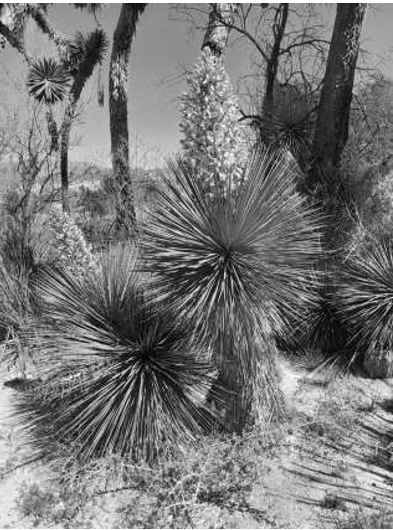
Yucca thompsoniana (Thompson’s Yucca) is an endemic species that grows in arid and semi-arid ecosystems in northern Mexico and is distributed in the states of Chihuahua and Coahuila. Currently this species is used for ornamental purposes without any official regulation to such an extent that it has been classified in the category of least concern (LC) according to the Red List of threatened species of the International Union for Conservation of Nature, for the above, it is important to use mechanisms or strategies for conservation both in situ and ex situ. The objective of this research was to characterize the fruits and seeds of Yucca thompsoniana Trel., through the morphological description of the variables length, width, thickness and weight of fruits and seeds, as well as the percentage of full or empty seeds per fruit. Descriptive statistics were performed on each of the variables considering frequency distribution, measures of central tendency and measures of dispersion. The results found in this study show that the seeds of Y. thompsoniana have the following dimensions: length of 8.24 mm, width of 7.35 mm, thickness of 2.28 mm, weight of 0.045 g and 22,222 seeds kg-1. The seeds are black. The fruits recorded a length of 51.2 mm, width of 24.2 mm, thickness of 21.2 mm and a weight of 9.8 g. Of the total seeds obtained, 60.03% were full seeds and 39.97% were empty seeds. Seed size can play an important role, since, in drought conditions, species with larger seeds have greater germination.
Article Details

This work is licensed under a Creative Commons Attribution-NonCommercial 4.0 International License.
References
Barriada-Bernal, L. G., Aquino-González, L.V., MéndezLagunas, L. L., Rodríguez-Ramírez, J., & Sandoval-Torres, S. 2018. Caracterización física y nutricional de frutos de yuca (Yucca mixtecana). Agrociencia, 52 (3), 347-359. https://www.scielo.org.mx/pdf/agro/v52n3/2521-9766-agro-5203-347.pdf
Borchert, M. I. 2016. Rodent removal of fallen Joshua tree (Yucca brevifolia) fruits. Bulletin of the Southern California Academy of Sciences. 115(3): 146–155. https://doi.org/10.3160/0038-3872-115.3.146
Borchert, M.I., y Defalco, L.A. 2016. Yucca brevifolia fruit production, predispersal seed predation, and fruit removal by rodents during two years of contrasting reproduction. American Journal of Botany. https://doi.org/10.3732/ajb.1500516
Bustamante-García, V., Prieto-Ruíz, J.A., Merlín-Bermudes, E., Álvarez-Zagoya, R., Carrillo-Parra, A. y Hernández-Díaz, J. C. 2012. Potencial y eficiencia de producción de semilla de Pinus engelmannii Carr., en tres rodales semilleros del estado de Durango, México. Madera y Bosques. 18 (3): 7-21. https://www.scielo.org.mx/pdf/mb/v18n3/v18n3a2.pdf
Chase, M.W., Reveal, J.L., Fay, M.F. 2009. A subfamilial classification for the expanded asparagalean families Amaryllidaceae, Asparagaceae and Xanthorrhoeaceae. Botanical Journal of the Linnean Society. 161(2): 132–136. https://doi.org/10.1111/j.1095-8339.2009.00999.x
Duarte E.R., Mangeón V., Küppers G., Rocha P., Niella, F. 2017. Tamaño y viabilidad de semillas: implicancias en la evolución y conservación de Phaius tankervilleae (Orchidaceae). Caldasia. 39: 388-399.https://doi.org/10.15446/caldasia.v39n2.62184.
El Sayed, A.M., Basam, S.M., El-Naggar, E.-M.B.A., Marzouk, H.S., El-Hawary, S. 2020. LC–MS/MS and GC–MS profiling as well as the antimicrobial effect of leaves of selected Yucca species introduced to Egypt. Scientific Reports. 11(1): 1-16. https://doi.org/10.3390/ani11010093
García, E. 2004. Modificaciones al Sistema de Clasificación Climática de Köppen (Para adaptarlo a las condiciones de la República Mexicana). México. http://www.publicaciones.igg.unam.mx/index.php/ig/catalog/vie w/83/82/251-1
Flores-Hernández, A., Hernández-Herrera, J. A., ValenzuelaNúñez, L. M., Murillo-Amador, B., Rueda-Puente, E.O., García-Hernández, J.L., Ortiz-Cano, H.G. 2011. Evaluación de la población natural y hábitat de palma azul (Yucca rigida) en Mapimí, Durango, México. Tropical and Subtropical Agroecosystems, 14(1), 315-321. https://cibnor.repositorioinstitucional.mx/jspui/bitstream/1001/10 90/1/flores_a2011vol14.pdf
Flora of North America (FNA). 2020 Yucca thompsoniana Trelease Vol. 26, 430 mencionado en las paginas 425, 431, 432 http://beta.floranorthamerica.org/Yucca_thompsoniana
Gelviz-Gelvez S.M., Pavón N.P., Flores J., Barragán F., Paz, H. 2020. Germination of seven species of shrubs in semiarid central Mexico: effect of drought and seed size. Botanical Sciences 98: 464-472. https://doi.org/10.17129/botsci.2537
Góngora-Chi, G. J., Lizardi-Mendoza, J., López-Franco, Y. L., López-Mata, M. A. y Quihui-Cota, L. 2023. Métodos de extracción, funcionalidad y bioactividad de saponinas de Yucca: una revisión. Biotecnia. 25(1): 147-155. https://doi.org/10.18633/biotecnia.v25i1.1800
Granados-Sánchez D., López-Ríos, G. F. 1998. Yucca "izote" del desierto. Revista Chapingo Serie Ciencias Forestales y del Ambiente 4(1):179-192. https://docplayer.es/32928861-Yucca-izote-del-desierto.html
Guillot O. D. y Van der M. P. 2008. El género Yucca L. en España. Monografías de la revista Bouteloua. No. 2. 124 p. www.floramontiberica.org International Seed Testing Association (ISTA). 2010. Reglas del ISTA. Septiembre de 2010. http://www.analisisdesemillas.com.ar/index.php?option=co m_content&task=view&id=15&Itemid=31 IUCN, 2021. The IUCN Red List of Threatened Species. Version 2021-2.
Johnson, M. B. 2000. Observations on some Chihuahuan Desert Yuccas. Desert Plants. 16(1): 14-19. https://repository.arizona.edu/handle/10150/554328
Magallán-Hernández, F., Maruri-Aguilar, B., Sánchez-Martínez, E., Hernández-Sandoval, L., Luna-Zúñiga, J. y RobledoMejía, M. 2014. Consideraciones taxonómicas de Yucca queretaroensis Piña (Agavaceae), una especie endémica del Semidesierto Queretano-Hidalguense. Acta Botánica Mexicana. 108: 51-66. https://www.scielo.org.mx/pdf/abm/n108/n108a4.pdf
Matuda, E. y Piña, L. I. 1980. Las plantas mexicanas del género Yucca. Colección miscelánea del Estado de México. Gobierno del Estado de México. Toluca, Estado de México. 145 p. http://acervos.inpi.gob.mx/cgi-bin/koha/opacdetail.pl?biblionumber=258761
Meza-Cota, A. B., Vargas-Hernández, J. J., Vázquez-Badillo, M. E., Villarreal-Quintanilla, J. Á., López-Aguillón, R., y Flores-López, C. 2022. Morfología, calidad de semillas y plántulas de Yucca endlichiana e implicaciones en su conservación. Ecosistemas y Recursos Agropecuarios 9(1): e2834. https://doi.org/10.19136/era.a9n1.2834
Mosseler, A., Major, J. E., Simpson, J. D., Daigle, B., Lange, K., Park, Y.S., Johnsen, K. H. y Rajora, O. P. 2000. Indicators of populations viability in red spruce, Picea rubens. I. Reproductive traits and fecundity. Canadian Journal Botany. 78:928–940. https://doi.org/10.1139/b00-065
Munsell Soil Color Charts. 2000. The Year 2000 revised washable edition. Michigan, USA: Munsell Color 4300 44th Street SE, Gran-dRapids, MI 49512, USA.
Norden N., Daws, M.I., Antoine, C., Gonzalez, M.A., Garwood, N.C., Chave, J. 2009. The relationship between seed mass and mean time to germination for 1037 tree species across five tropical forests. Functional Ecology. 23: 203-210. https://doi.org/10.1111/j.1365-2435.2008.01477.x
Paray, B.A., El-Basuini, M. F., Alagawany, M., Albeshr, M. F., Farah, M. A., Dawood, M.A.O. 2021. Yucca schidigera Usage for Healthy Aquatic Animals: Potential Roles for Sustainability. Animals. 11(93): 1-16. https://doi.org/10.3390/ani11010093
Patel, S. 2012. Yucca: A medicinally significant genus with manifold therapeutic attributes. Natural Products and Bioprospecting 2(6): 231-234. DOI 10.1007/s13659-012-0090-4
Pellmyr, O., Thompson, J. N., Brown, J. M., Harrison, R. G. 1996. Evolution of pollination and mutualism in the yucca moth lineage. American Naturalist 148: 827-847. https://doi.org/10.1086/285958
Pellmyr, O. 2003. Yuccas, yucca moths, and coevolution: a review. Ann. Missouri Botanical Garden. 90: 35-55. DOI:10.2307/3298524
Rao, N.K., Hanson, J., Dulloo, M.E., Ghosh, K., Novell, D., Larinde, M. 2007. Manual para el manejo de semillas en bancos de germoplasma. Manuales para Bancos de Germoplasma No. 8. Bioversity International. Roma, Italia. 165 p.
Redmond, M.D., Forcella, F. and Barger, N.N. 2012. Declines in pinyon pine cone production associated with regional warming. Ecosphere. 3(12): 1-14. Art 120. https://doi.org/10.1890/ES12-00306.1
Rocha, M., Good-Ávila, S.V. Molina-Freaner, F., Arita, H.T., Castillo A., García-Mendoza, A.J., Silva-Montellano, A., Gaut, B.S., Souza, V., and Eguiarte, L.E. 2006. "Pollination Biology and Adaptive Radiation of Agavaceae, with Special Emphasis on the Genus Agave, Aliso Vol. 22: Iss. 1, Article 27. https://scholarship.claremont.edu/aliso/vol22/iss1/27
Sánchez-Salas, J., J. Flores, J., Muro-Pérez, G. Arias-Montes, S. y Jurado, E. 2015. Morfometría de semillas en la cactácea amenazada de extinción Astrophytum myriostigma Lemaire. Polibotánica (39):119-131. https://www.scielo.org.mx/scielo.php?script=sci_arttext&pid=S1 405-27682015000100007.
Sturges, H. 1926. The choice of a class-interval. Journal. American Statistical Association 21:65-66. https://doi.org/10.1080/01621459.1926.10502161
Thiede, J. 2020. Yucca AGAVACEAE. In: Eggli, U., Nyffeler, R. (eds) Monocotyledons. Illustrated Handbook of Succulent Plants. Springer, Berlin, Heidelberg. pp 363-421. https://doi.org/10.1007/978-3-662-56486-8_109
Trelease, W. 1911. An additional tree-yucca and one other species new to the United States. Missouri Botanical Garden Annual Report. 22: 101-102.
Urban Xeriscape. 2024. Thompson’s Bayoneta Yucca (Yucca thompsoniana). https://urbanxeriscape.com/product/thompsons-bayonetayucca-yucca-thompsoniana/
Velasco-García, M. V., López-Upton, J., Ángeles-Pérez, G., Vargas-Hernández, J., Guerra-de la Cruz, V. 2007. Dispersión de semillas de Pseudotsuga menziesii en poblaciones del centro de México. Agrociencia. 41:121-131. https://www.scielo.org.mx/pdf/agro/v41n1/1405-3195agro-41-01-121.pdf.
Villarreal, Q. J.A. 2021. XXIII. Flora de Coahuila. En: Listados Florísticos de México. 138 p. http://www.ibiologia.unam.mx/BIBLIO68/fulltext/lf23.p
Villaseñor, J. L. 2016. Catálogo de las plantas vasculares nativas de México. Revista Mexicana de Biodiversidad. 87: 559902. https://www.scielo.org.mx/pdf/rmbiodiv/v87n3/18703453-rmbiodiv-87-03-00559.pdf