
Evaluation of the structure and diversity of a productive area with a forestry pastoral system
Article Sidebar
Published:
Mar 7, 2022
Keywords:
sewage biodiversity, pastoral forestry, Shannon index, agroforestry
Main Article Content
Abstract
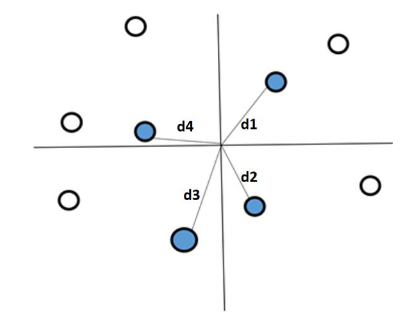
Biodiversity is a term that encompasses a large amount of information so it is necessary to specify the subject with which you are working and your purposes. The objective of this research was the evaluation of the forest biodiversity that exists within a pastoral forestry system. The work was carried out at Los Finitos ranch, Montemorelos N.L., in a permanent plot in which a silvicultural pastoral system is applied. The analysis was carried out using the square center point methodology for data collection that was analyzed through the Shannon-Weaver, Margalef and importance value indexes.
Article Details
How to Cite
Santos-Sánchez, J. M., Rosales-Hernández, J. A., & Villalón-Mendoza, H. (2022). Evaluation of the structure and diversity of a productive area with a forestry pastoral system. Revista Latinoamericana De Recursos Naturales, 18(1), 1-5. Retrieved from https://revista.itson.edu.mx/index.php/rlrn/article/view/311
Section
Original Article

This work is licensed under a Creative Commons Attribution-NonCommercial 4.0 International License.
References
Belsky, A.J. (1993). Influences of trees on savanna productivity: tests of shade, nutrients, and tree-grass competition. Ecology 75: 922932.
Delgadillo, A.P. (1999). Integración de un sistema agroforestal bajo condiciones de secano en el noreste de México. Tesis Profesional. Facultad de Ciencias Forestales, UANL, México. Pp.103.
Farrell, J.G., Altieri, M.A. (1999). Agroecología, bases científicas para una agricultura sustentable. Ed. Nordan Comunidad. Montevideo, Argentina. Pp.229-243
Harvey C., Haber W. (1999). Remnant trees and the conservation of biodiversity in Costa Rica pastures. Agroforestry System 44: 37-68
Koppen, W. (1936). Das geographische system der klimat. Handbuch der klimatologie, 46.
Magurran, A.E. (2004). Measuring Biological Diversity. Oxford, UK: Blackwell Science.
Maldonado, A.L.J. (1991). El rol de los sistemas agroforestales en zonas áridas y semiáridas (experiencia en Latinoamérica). Reporte científico No. especial 6. FCF, UANL.
Moreno, C.E. (2001). Métodos para medir la biodiversidad. M&T–Manuales y Tesis SEA (1a ed., Vol. 1). Pachuca, Hidalgo, México: Editado por Cooperación Iberoamericana (CYTED), Unesco (Orcyt) y SEA. https://doi.org/10.1017/CBO978110741532 4.004.
Mostacedo, B., Fredericksen, T. S. (2000). Manual de métodos básicos de muestreo y análisis en ecología vegetal. Santa Cruz, Bolivia: BOLFOR.
https://doi.org/10.1007/s13398-014-01737.2.
Pando M., M., Villalón M., H. (2001). Potential agroforestry species identified in the Tamaulipan thornscrub of northeastern México. Agroforestry Today. 13:14-15.
Perfecto, I., Rice, R.A., Greenberg, R., Van der Voort, M.E. (1996). Shade coffee: a disappearing refuge for biodiversity: shade coffee plantations can contain as much biodiversity as forest habitats. BioScience, 46(8), 598-608.
Rice, R.A., Greenberg R. (2000). Cacao cultivation and the conservation of biological diversity. Ambio. 3:167p
Sanford, W.W., Usman, S., Obot, E.O., Isichei, A.O., Wari, M. 1982. Relationship of woodyplants to herbaceous production in Nigerian Savannas. Tropical Agriculture 59:315-318.
Schuck, A., Parviainen, J., Bücking, W. (1994). A review of approaches to forestry research on structure, succession and biodiversity of undisturbed and semi-natural forests and woodlands in Europe. Joensuu: European Forest Institute.
Shannon, C.E. (1948). A mathematical theory of communication. En C. E. Shannon & W. Weaver (Eds.), The Development of Information Theory. University of Illinois: Press Urbana (pp. 29–125).
Whittaker, R.H. (1972). Evolution and measurement of species diversity. Taxon, 21(2), 213-25.